
DESIGN PHILOSOPHY
CTS supports advanced manufacturing programs from tooling definition through manufacture and validation.
Our involvement includes:
- Tooling specification support
- Evaluation of material behavior and durability
- Tolerance strategy development
- Assessment of tooling design before manufacture
- Technical collaboration during program development

TRADE OFFS
Every tooling solution involves technical trade offs.
- Tolerance vs cost
- Cycle time vs durability
- Complexity vs consistency
These relationships must be understood early. CTS works with engineering teams to evaluate these trade offs before tooling manufacture begins, allowing programs to proceed with clear technical and commercial alignment.
LIFECYCLE ACCOUNTABILITY
Tooling must support the requirements of the program it serves.
Some applications require long production lifecycles with consistent dimensional stability. Others may involve prototype tooling or shorter production runs. CTS develops tooling solutions aligned to the operational requirements of each program, accounting for durability, inspection requirements and production rate.
OUR PRINCIPLES
CTS maintains technical discipline in every program:
- We do not introduce complexity unless it improves performance
- We do not over-specify tooling to avoid necessary technical decisions
- We do not optimize one component at the expense of the full manufacturing system
OUR PRODUCTS
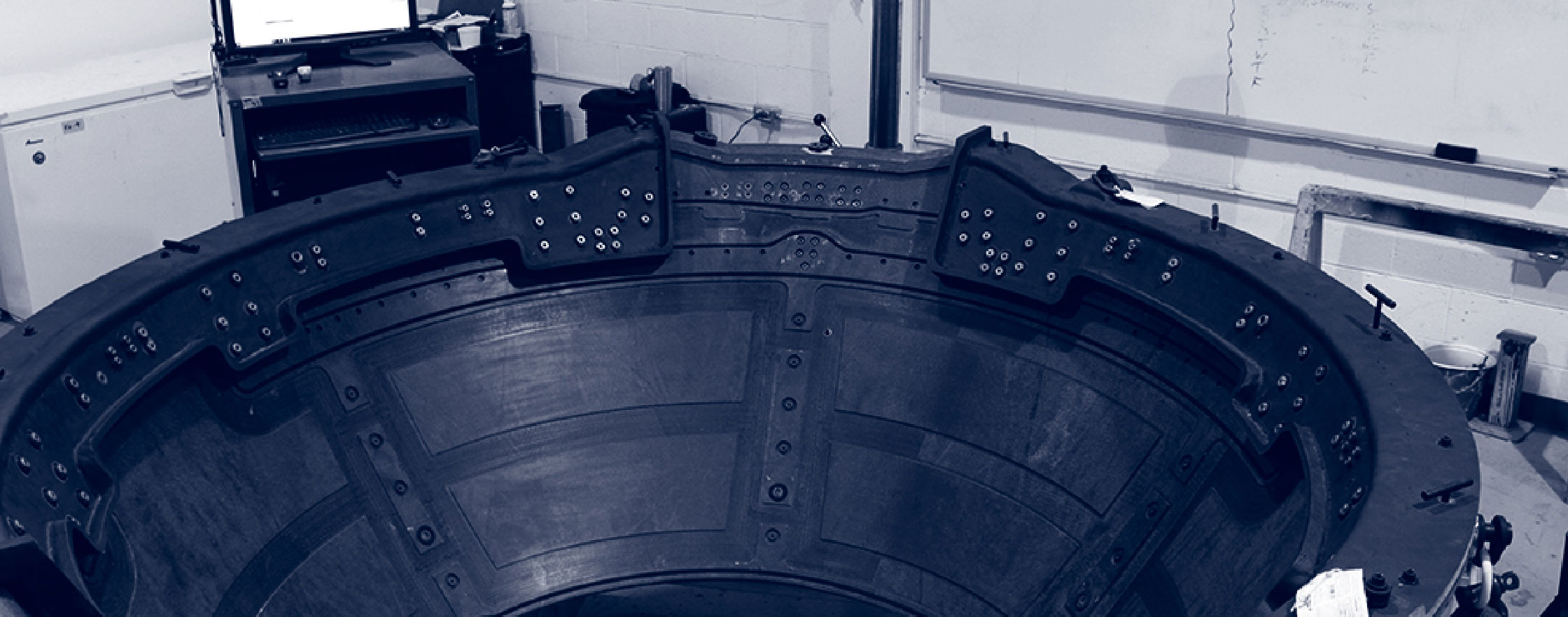
1. PATTERNS AND MOLDS
Composite tooling engineered for dimensional accuracy, surface quality and structural stability.
Design considerations include thermal behaviour, cure cycles, reinforcement strategy and inspection access.

2. FIXTURING SYSTEMS

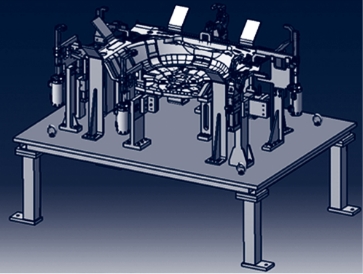
Precision fixturing systems designed to maintain alignment and repeatability during assembly and manufacturing.
Engineered to support tolerance requirements throughout production.
3. COMPOSITE METAL AND HYBRID TOOLING
Tooling solutions developed for environments where composite and metallic materials interact.
CTS evaluates thermal expansion behaviour,
structural loading and interface precision across materials.